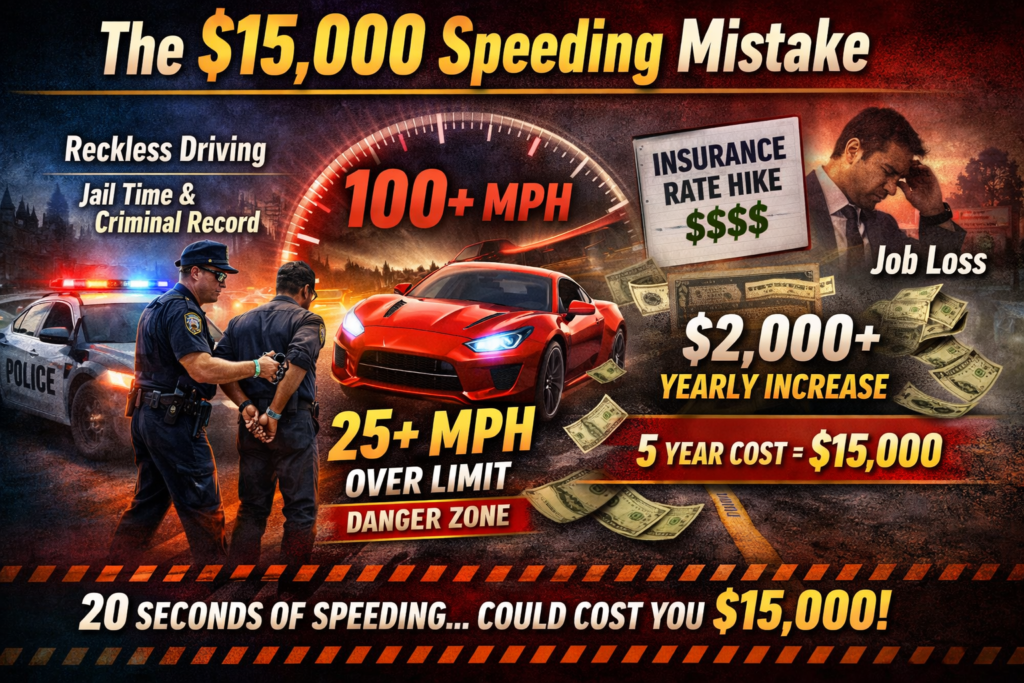
The $15,000 Speeding Mistake
What if I told you that 20 seconds of “fast driving” could cost you $15,000 over the next five years? Most Texans worry about the $200 ticket, but they completely miss the $2,000-a-year insurance hike and the potential loss of their job.
People often ask, “How many MPH is a criminal offense in Texas?” because they want to know the “limit.” But in 2026, with AI-powered speed traps and stricter reckless driving laws, that limit is moving faster than your car. This article breaks down the “Magic Numbers”—the 25 MPH rule, the Reckless Driving threshold, and the 2026 updates that every driver needs to know to keep their bank account and their freedom intact.
Is There a “Magic Number” for Criminal Speed?
In most states, exceeding a speed of 20 MPH by a margin is an automatic criminal case. However, Texas is somewhat different. Our speed laws are referred to as Prima Facie. This is in the sense that you may not be caught with a particular number that makes you be arrested, but it is more about your driving situation rather than the number on your dashboard. Nevertheless, once you cross the 25 MPH mark, you officially enter the ‘Danger Zone’ where officers are much more likely to escalate a ticket to a criminal charge. It still may be a Class C Misdemeanor (a fine-only offense), but you lose the best weapon that you have, which is the dismissal option of the ticket.
The 25 MPH Point of No Return
If you are caught going 25 MPH or more over the posted limit, you are legally ineligible for a driving safety course. This is where a simple speeding ticket starts its journey toward becoming a criminal offense in Texas.
When you can’t take a safety course, the ticket goes straight onto your permanent driving record. In 2026, insurance companies are using real-time data to scan these records. A single 25+ MPH conviction can classify you as a “High-Risk Driver,” potentially doubling your premiums overnight.
When Speeding Becomes “Reckless Driving”
Then, when does a cop cease to write a ticket and begin to grab the handcuffs? The solution is found in Texas Transportation Code 545.401, otherwise referred to as Reckless Driving.
In Texas, a criminal offense comes into effect when you are not merely going fast, but exhibiting a willful or wanton disregard for the safety of other persons or property. In 2026, officers and judges often use the 30 MPH over mark as a baseline for recklessness.
The Class B Misdemeanor Trap
If you are charged with Reckless Driving, you are no longer dealing with a traffic ticket. You are facing a Class B Misdemeanor. Here is what that looks like in 2026:
- Jail Time: Up to 30 days in county jail.
- Fines: A fine of up to $200 (plus massive court costs).
- Criminal Record: This will show up on every background check for the rest of your life.
Imagine applying for a job and having to explain that you have a criminal record because you were late for a meeting. It’s a legal “anchor” that is hard to drop.
The “Safety Zone” Penalties: Schools and Construction
If you think the highway is strict, the rules in School Zones and Construction Zones are on another level. In 2026, Texas implemented zero-tolerance policies in these areas.
If you are speeding in a school zone where children are present, or in a construction zone with workers on-site, a judge can easily escalate a speeding charge to Criminal Negligence. In these zones, even going 15 MPH over can be argued as a criminal offense in Texas because the risk to human life is so high.
Furthermore, these tickets often carry Double Fines. A ticket that would normally cost $250 can easily turn into a $500 fine before you even factor in the court reimbursement fees.
The 2026 Warrant Update: House Bill 2282
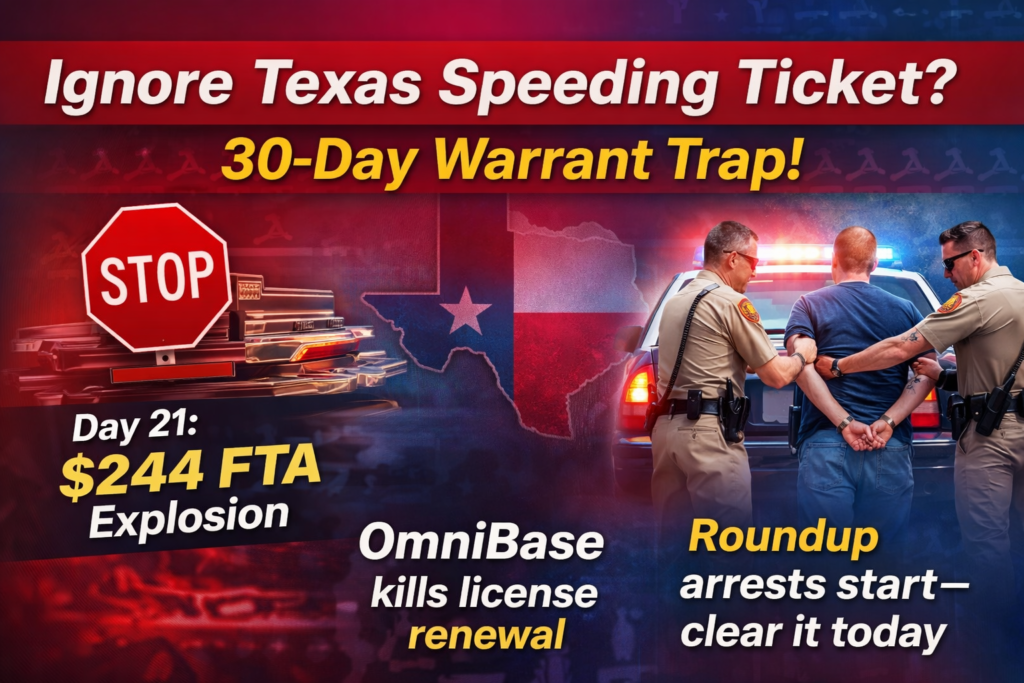
One of the biggest changes this year involves what happens after you get the ticket. If you ignore a speeding ticket that has been classified as a serious offense, the state will issue a warrant.
Under House Bill 2282, which became fully effective in January 2026, the fee for processing an arrest warrant has increased to $75. This is a mandatory fee added to every single charge. If you have a reckless driving charge and a failure to appear, you are looking at $150 in warrant fees alone—before you even pay the original fines.
The Hidden “Insurance Tax”
Let’s talk about the real cost. A criminal offense in Texas for speeding isn’t a one-time payment. It is a three-to-five-year financial drain.
According to 2026 Texas insurance data:
- Standard Speeding (1-10 MPH over): 10-15% increase.
- Excessive Speeding (20+ MPH over): 25-30% increase.
- Reckless Driving Conviction: 50% to 100% increase.
If you pay $2,000 a year for car insurance, a Reckless Driving charge could push that to $4,000. Over five years, that is $10,000 in extra payments. This is why fighting the ticket or taking a safety course (if eligible) is the smartest financial move you can make.
How to Protect Your Record in 2026
If you find yourself facing an excessive speeding charge, don’t panic, but don’t wait. Here is your survival plan:
- Check for Eligibility: Even if you were going fast, ask the court if you can still take a Texas-approved defensive driving course. Sometimes, a prosecutor may allow you to take the course in exchange for a “Deferred Disposition.”
- Use Dashcam Evidence: In the digital age, your own camera is your best witness. If you can prove you weren’t swerving or endangering others, you can often get a Reckless Driving charge reduced to a simple speeding ticket.
- Seek an “Indigency Hearing”: If you truly cannot afford the fines, remember SB 1913. The court must offer you alternatives like community service instead of jail time for unpaid fines.

Conclusion: Take Control of Your Driving Future
The worst thing you can do is treat an excessive speeding ticket like a minor annoyance. In 2026, the state’s digital net is tighter than ever. A single criminal offense in Texas for speeding can follow you from the courtroom to the insurance office and even to your next job interview.
Don’t let a “lead foot” ruin your financial future. If you are eligible, completing a defensive driving course is the fastest and cheapest way to keep your record clean and your insurance rates low.
Ready to clear your record? Visit our latest guides on Texas traffic laws or sign up for a TDLR-approved safety course today to stay ahead of the 2026 digital trap.
FAQs: Speeding and Criminal Charges
Yes. While most speeding is a fine-only offense, if your speed is deemed “reckless” (usually 30+ MPH over or endangering others), you can be arrested and sentenced to up to 30 days in jail.
A standard Class C speeding ticket usually only shows up on your driving record. However, a Reckless Driving conviction is a Class B Misdemeanor and will appear on a criminal background check.
Texas doesn’t use the term “Super Speeder,” but the 25 MPH rule acts similarly by removing your right to an easy ticket dismissal.
Usually, no. However, if that ticket is for Racing or if it results in a “Reckless Driving” conviction, the DPS has the authority to suspend your driving privileges.